
Two years ago, researchers at MIT proposed a provocative idea: as AI models become more powerful, they begin to see the world in the same way. But not everyone was convinced and now EPFL scientists have shown that the picture is more nuanced.
Today’s artificial intelligence systems learn by being trained on massive datasets. Language models are trained on text, vision models on images and video, and audio models on sound data. Yet these different data types are often grounded in the same reality. In 2024, researchers at the Massachusetts Institute of Technology argued that, as models grow more capable no matter what data they are trained on (images, text, video or audio), the way they see the world is growing more similar.
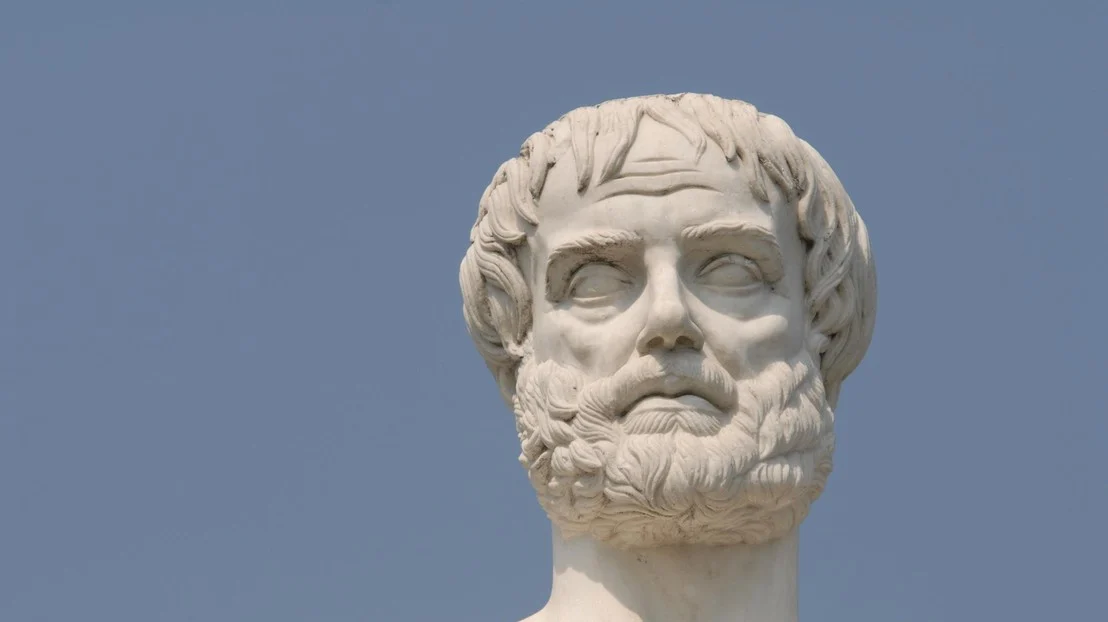
Their Platonic Representation Hypothesis suggested that, like Plato’s ideal forms, these systems appeared to be discovering the same underlying structure of the world.
The idea quickly captured the imagination of the AI community and raised profound questions. If different AI systems independently arrive at the same internal view of reality, does this reveal something fundamental about intelligence itself?
Measuring distances between concepts
Inside modern AI systems, concepts such as “dog,” “car,” or “tree” are represented as vectors in high-dimensional spaces. To measure similarity among models, researchers can compare these internal representations by looking at the patterns of distances or similarities among many concepts. Based on the findings from such comparisons, the MIT work suggested that, as models become more capable, their internal representations increasingly align across systems, hinting at convergence toward a shared representation of the world. But the EPFL team suspected something was missing.
So, researchers from the Machine Learning for Biomedicine Laboratory part of EPFL’s School of Computer and Communications Sciences and School of Life Sciences, revisited the Platonic hypothesis and uncovered a more complex picture. “The original idea was extremely exciting,” explains Assistant Professor Maria Brbic, head of the lab and co-author of the study. “But we kept coming back to the same question: what did the similarity scores actually mean?”
The answer is in the maths
In their new paper, being presented at the 2026 International Conference on Machine Learning in July, Brbic and her colleagues argue that the apparent convergence of different models was misleading: the models looked more similar partly because of problems in the way the similarities were measured. As AI models get bigger and more complex, the similarity scores can naturally go up, even if the models are not actually learning the same underlying structure of the world. Their findings suggest that AI systems do not converge toward a single universal representation of reality in the way many researchers had begun to imagine.
Part of the problem lies in the strange mathematics of high-dimensional spaces. In everyday three-dimensional space, randomness behaves intuitively. In extremely high-dimensional spaces – the kind used by modern neural networks – distances can “concentrate,” meaning that many unrelated points can end up being almost equally distant from one another.
“We took ideas from high-dimensional geometry and used them to question the similarity metrics. Once we did that, a lot of things started to fall apart,” said Fabian Gröger, a PhD student at the University of Basel and lead author of the paper who spent time as a visiting researcher at EPFL with Brbic. He worked on the problem along with Shuo Wen, a PhD student in the MLBio lab.
“The simplest question we asked at the start was: if I take two random models that are completely independent, have never been trained, and have never seen data, why should a metric report non-zero similarity? That suggests similarity even when there is no shared learned structure,” said Brbic. “If two random models already appear similar, then the metric may be picking up a mathematical baseline rather than meaningful shared structure.”
Yet the EPFL team did not conclude that convergence disappears entirely. Instead, they found that one particular type of similarity remains remarkably stable: local neighborhood relationships between concepts.
In practice, this means AI systems often learn that certain ideas belong together – cars cluster near other cars, animals near animals, and related concepts form stable neighborhoods – even if the larger geometry of the models differs significantly.
“What matters is not necessarily the absolute structure of the space, but who is near whom,” says Brbic.
Plato versus Aristotle
In response to this insight, the team proposed the Aristotelian Representation Hypothesis. While Plato emphasized universal ideal forms, his student, Aristotle focused more on relationships, categories and context. The researchers argue that this relational view better describes how modern AI systems organize knowledge.
The distinction may sound abstract, but it carries important implications for the future of AI. The Platonic hypothesis had encouraged the idea that sufficiently advanced AI systems might naturally converge toward a shared and stable understanding of the world. For some, this raised hopes that advanced AI systems might become easier to compare, combine, or align. The EPFL findings complicate that picture.
“Our work suggests there can still be significant differences in how models represent the world globally,” says Gröger. “That matters for alignment, multimodal systems and ultimately how we understand what these models are actually learning.”
The study also introduces a new framework for evaluating representation similarity that corrects for the biases identified by the researchers. The team tested the approach across language, vision and video models, finding consistent evidence for local convergence rather than global alignment.
Pushing science forward
Importantly, the work has been received positively by the researchers behind the original Platonic hypothesis. Before publishing the paper, the EPFL team contacted the MIT authors to discuss the findings.
“The response was very constructive,” says Brbic. “This is how science progresses. You refine ideas, test assumptions, and gradually build a better understanding together.”
Far from closing the debate, the work opens new questions about what exactly AI systems share and what remains fundamentally different between them. “The next challenge is to understand precisely which local structures converge, and whether that knowledge could help us build more reliable and better aligned AI systems,” concluded Gröger.
Author: Tanya Petersen
Source: EPFL