
EPFL Professors named Schmidt Sciences AI2050 Fellows

Published

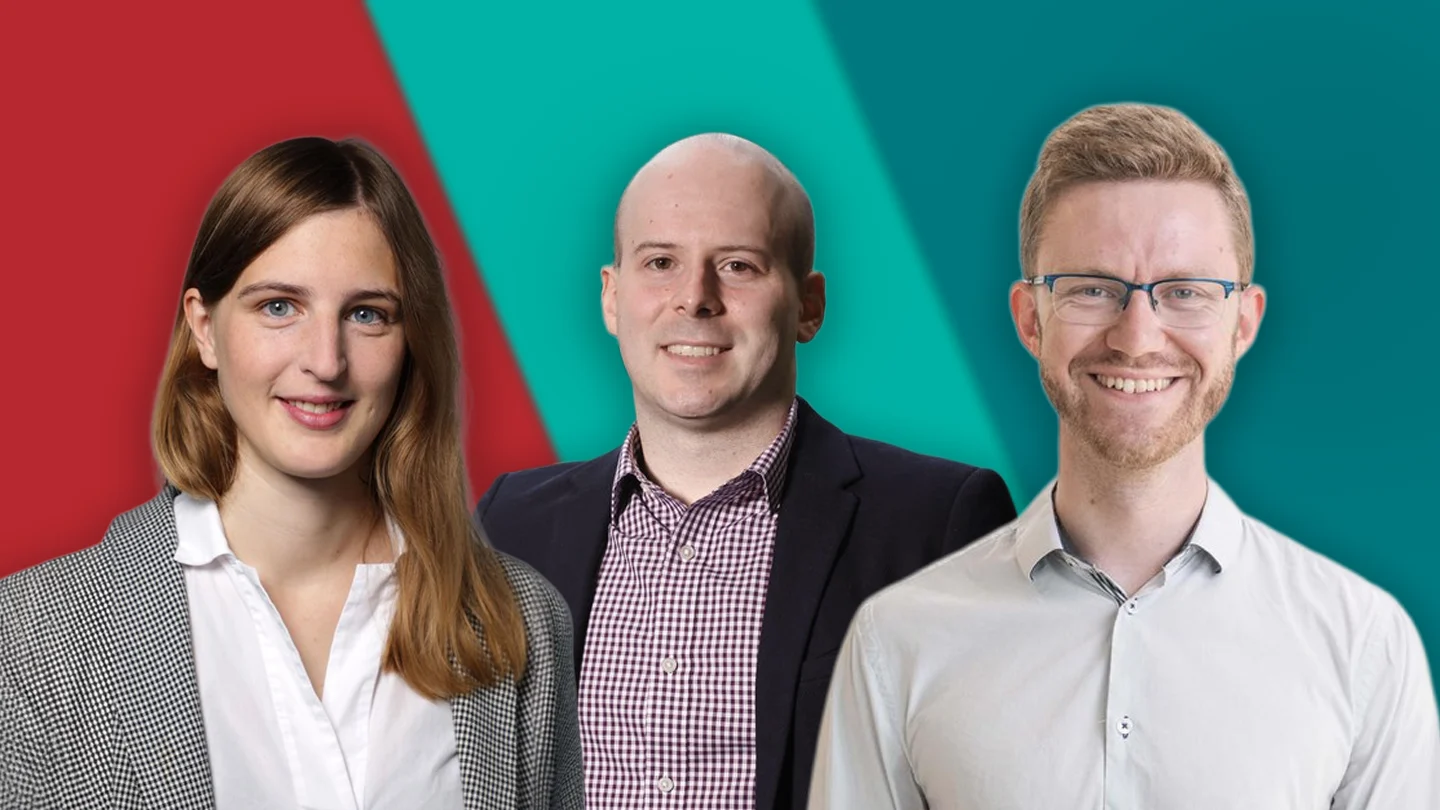
Antoine Bosselut, Charlotte Bunne and Martin Schrimpf have been awarded prestigious 2025 Schmidt Sciences AI2050 fellowships, to focus on how to fulfill AI’s potential to dramatically benefit humankind.  
EPFL has become the first university in mainland Europe to have researchers admitted to the Schmidt Sciences AI2050 Fellows Community, this year receiving three fellowships, more than any other institute globally in 2025. The Fellows program supports ‘exceptional people working on the key opportunities and hardest problems that are critical to get right for society to benefit from AI’.  

Schmidt Sciences is an influential, US based not-for-profit co-founded by the former Google CEO and executive chairman of Alphabet, Eric Schmidt with his wife, Wendy. This year’s twenty-eight fellows are the 4th cohort of the program, which now supports ninety-nine researchers across eight countries, the majority in the United States. Europe’s only other fellowship was awarded at Germany’s Max Planck Institute in 2024. 

Assistant professor, Antoine Bosselut from the School of Computer and Communication Sciences, and Assistant Professors Charlotte Bunne and Martin Schrimpf, jointly with the School of Computer and Communication Sciences and School of Life Sciences, have been recognized for their bold and ambitious work in AI.  

As Early Career fellows, they each receive 500,000 USD in funding to support a three-year project that advances their research as well as additional support, such as connections to stakeholders, to help them advance and amplify their results.  

Antoine Bosselut – Democratizing LLMs for languages around the world 

Large Language Models (LLMs) have principally benefited communities whose languages are well-represented in the data used for training LLMs, such as English or Chinese. While these few “high-resource” languages are used by many around the world, they do not cover large segments of the global population of 8.2 billion, who collectively speak over 7000 languages. Bosselut’s project will democratize LLMs for these users, leveraging new algorithms that catalyze LLMs to understand and speak these languages, all while reflecting the nuances of the regions where these languages are spoken, and the cultures of the people that speak them. 

Charlotte Bunne – Introducing biological world models 

Biology needs its own transformative leap in artificial intelligence: moving beyond static snapshots to systems that simulate, understand, and reason, about living cells and tissues. Bunne’s project introduces biological world models: computational frameworks that integrate multimodal data into structured, spatially and molecularly grounded representations of cellular and tissue organization. Equipped with generative simulators and intelligent reasoning agents in a closed feedback loop, these models forecast system dynamics, test hypotheses, and optimize therapeutic strategies. Validated through collaborations with experimental and clinical partners, this approach lays the foundation for simulation-based discovery and decision support, with initial applications in cancer treatment prediction. 

Martin Schrimpf – Building digital twins of the human brain 

Schrimpf will build digital “twins” of the human brain: computational models that integrate large-scale neural data and AI methodology to simulate how the brain transforms sensory inputs into meaning. His work aims to uncover the mechanisms underlying perception and cognition and to extend these models to brain conditions such as dyslexia. This research paves the way for predictive, data-driven neuroscience as well as model-guided clinical interventions. 

Ambitious and collaborative research 

“AI2050 Early Career Fellows are selected using a highly selective nomination process, making it an incredible honor for EPFL to have been recognized with three 2025 fellowships in such multi-disciplinary AI research. This demonstrates that our institution and Switzerland are at the forefront, of not only fundamental AI, but also of AI applied to other sciences,” said Sabine Süsstrunk, Dean of the School of Computer and Communication Sciences.  

The focus of the Schmidt Sciences AI2050 Program underscores that artificial intelligence will bring about an epochal shift in our society with the AI2050 fellows shaping that change so that it is of wide benefit to as many people as possible.  

“AI is underhyped, especially when it comes to its potential to benefit humanity,” said Eric Schmidt. “The AI2050 fellowship was established to turn that potential into reality by supporting the people and ideas shaping a healthier, more resilient, and more secure world.” 

Author: Tanya Petersen

Source: EPFL

Share

You might be also interested in

EPFL researchers create an AI model that thinks like we do

An EPFL team has created a new Large Language Model that is structured similarly to a human brain, allowing users more control and moving away from “black box” AI.

When a standard Large Language Model (LLM) is confronted with a problem, it tries to solve it by matching it to similar information it has seen before, and then give an answer based on those past patterns. But how it decides which information to use and what value it gives to different pieces of information can be somewhat inscrutable from the outside.

The LLM MiCRo (Mixture of Cognitive Reasoners) is architecturally divided into four specialized areas that act like different parts of the human brain, allowing users to have more control over how it approaches a question, and to better understand how it comes to its answers. The model, which was presented at the International Conference on Learning Representations, comes from the NLP Lab, part of the School of Computer and Communication Sciences (IC), and the NeuroAI Lab, part of IC and the School of Life Sciences at EPFL.

The four experts

To create MiCRo, researchers identified four regions of the brains specializing in different functions, which they call ‘experts’: language, logic, social reasoning, and world knowledge.

“The brain is organized into specialized regions, each tuned to handle a specific function. So far, we don’t see this division of labor as clearly in current language models,” says Badr AlKhamissi, a PhD candidate leading this research. “We picked four brain regions that neuroscientists know well and gave the model its own specialized modules, each one trained to be analogous to one of those brain regions.”

An LLM usually functions as a stack of layers that a problem or question can be processed through. In the case of MiCRo, each layer is divided into the four different experts. You give a sentence to the model starting at layer one, for example “The cat is asleep”. Then within this layer, the router can choose one expert for the first word “the”, but a different epxert for second word “cat” and so on, making it modular and highly adaptable.

“Each word of a sentence can go to different experts,” AlKhamissi explains. “So one sentence can actually be processed by multiple experts at each layer.”

Consider a prompt like: “Emma wants to split a CHF 60 dinner bill among three friends, but she knows that Jake lost his job last week and is too proud to say he’s struggling.” A purely mathematical module handles the arithmetic: CHF 60 divided by three is CHF 20 each. But the social reasoning module picks up on something subtler: Emma’s awareness of Jake’s situation, his unspoken pride, and the implicit suggestion that she might quietly cover his share. Both kinds of reasoning are needed to fully understand what’s going on, and in MiCRo, each aspect of the prompt is routed to the expert best equipped to handle it.

“When we see how the model works, we can see that it routes the words that relate to the social aspects to the social expert, and when it does the mathematical part, it routes those numbers to the logic expert.”

This separation makes it easier to see how the model is ‘thinking’ and why it makes certain decisions. It also means decisions can be steered – for example, you can decide to increase the impact of the social expert, or suppress the logic expert, depending on what kind of model you want to use in a certain situation.

“In traditional LLMs, you can do this via prompting by telling the model to make the output more social or make it more related to emotions,” AlKhamissi says. “But here, this is done by intervening in the architecture itself without doing any prompting.”

“A virtuous circle”

To create MiCRo, the EPFL team worked with Greta Tuckute, a neuroscientist from Harvard and MIT, to understand which parts of the human brain are activated by different problems, and then applied that learning to the model.

To identify the region analogous to the ‘logic’ expert in the brain, neuroscientists give humans demanding tasks, such as hard mathematical equations, and less demanding tasks, like easy mathematical equations, and then recorded their brain activity to find which brain regions are the most active for the demanding tasks versus non-demanding tasks. AlKhamissi’s team then did the same for the model, giving it demanding mathematical equations to see which experts would be most activated.

“The cool thing is we just used exactly what they do in neuroscience, but in the model. And the model was able to identify those experts on its own.”

While neuroscience informs the model, the model also informs the understanding of the brain, potentially allowing neuroscientists to discover the contributions of different areas for a given problem or question; for example that a certain sentence activates the language areas 20%, the mathematical areas 50%, and the social reasoning areas 40%.

“For my PhD work, I have been interested in this virtuous circle between neuroscience and AI. In one direction, we use findings and insights from neuroscience about the brain and integrate them into language models,” AlKhamissi says, “and now, with models like MiCRo, we can explore the other direction and ask how we can use AI models to help us understand the brain in a better way.”

Author: Stephanie Parker
Source: EPFL

Smarter waste sorting with AI

EPFL startup WasteFlow has developed an AI-powered copilot that identifies and measures waste streams, helping sorting facilities work more efficiently. Support from several EPFL entrepreneurship programs helped the company accelerate the development of its technology.

(more…)

EPFL launches the world’s first fully open medical LLMs

MeditronFO is the first fully open framework for building medical large language models, to make AI in healthcare more transparent and accountable.

(more…)