
IC Assistant Professor Maria Brbić, has been awarded SNSF Starting Grants for her innovative research project tackling a critical scientific and societal challenge.
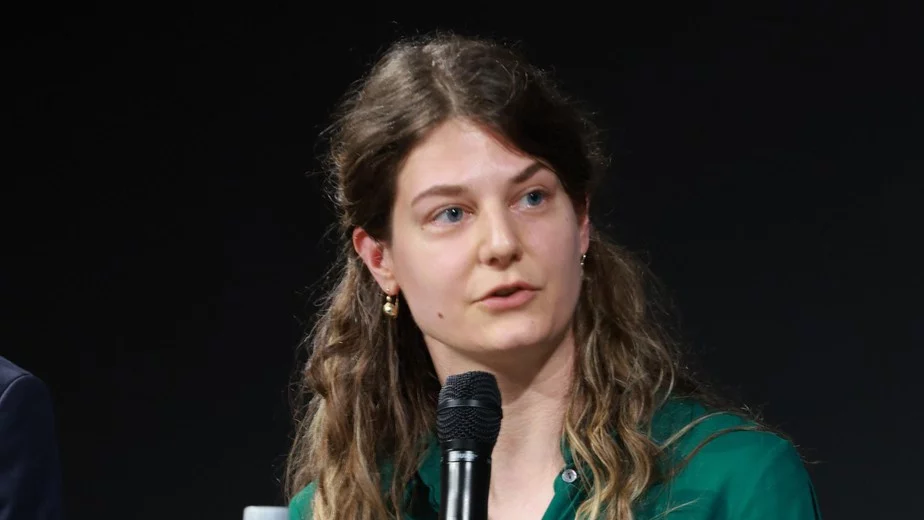
SNSF Starting Grants, funded by the State Secretariat for Education, Research, and Innovation (SERI), provide early-career researchers at Swiss institutions the opportunity to establish their own teams and carry out groundbreaking independent projects. Each project is selected for its potential to advance knowledge and impact the scientific community.
Developing AI Models for Cellular Biology
Maria Brbić, head of the Machine Learning for Biomedicine Lab (MLBIO) is spearheading a transformative project at the intersection of machine learning and cellular biology. Recent advances in single-cell technologies allow scientists to study the molecular heterogeneity of individual cells, offering unprecedented insights into health and disease. However, the complexity and scale of the data require novel computational tools.
Brbić’s awarded project aims to develop a multi-modal generative AI model—a “foundation model” for cellular biology—trained on millions of cells across diverse omics datasets, including genomics, proteomics, and imaging. Unlike existing models that focus on specific modalities, this model will integrate multiple data types into a unified representation. The project’s ambitious goal is to enable new discoveries, such as identifying biomarkers, understanding gene regulation, and predicting cellular drug responses.
The project will achieve this through three key objectives: developing innovative pretraining strategies for the model, enabling discoveries in previously unexplored biological contexts, and creating a framework for predicting drug responses at a cellular level. The outcome will push the boundaries of both machine learning and biomedicine, offering new tools for understanding life at its most fundamental level and paving the way for personalized medicine.
Brbić’s research represents a paradigm shift, providing not just theoretical insights but practical tools that could revolutionize how we diagnose and treat diseases. The project’s applications are vast, spanning basic biology, pharmacology, and beyond.
Maria Brbic is an Assistant Professor of Computer Science and Life Sciences at EPFL. She is also affiliated with the EPFL AI Center and EPFL Institute of Bioengineering (IBI).
Authors: Tanya Petersen, Nik Papageorgiou