
Driven by AI, the advent of autonomous mobility has accelerated in recent years. It has advantages that go beyond the asphalt.
One of the first test drives of an autonomous vehicle in a public area took place on an EPFL campus in the early 2010s. That’s when a self-driving shuttle bus – with a student onboard just in case – traveled a few hundred meters on a course set up around the Rolex Learning Center at a speed capped at a few kilometers per hour.
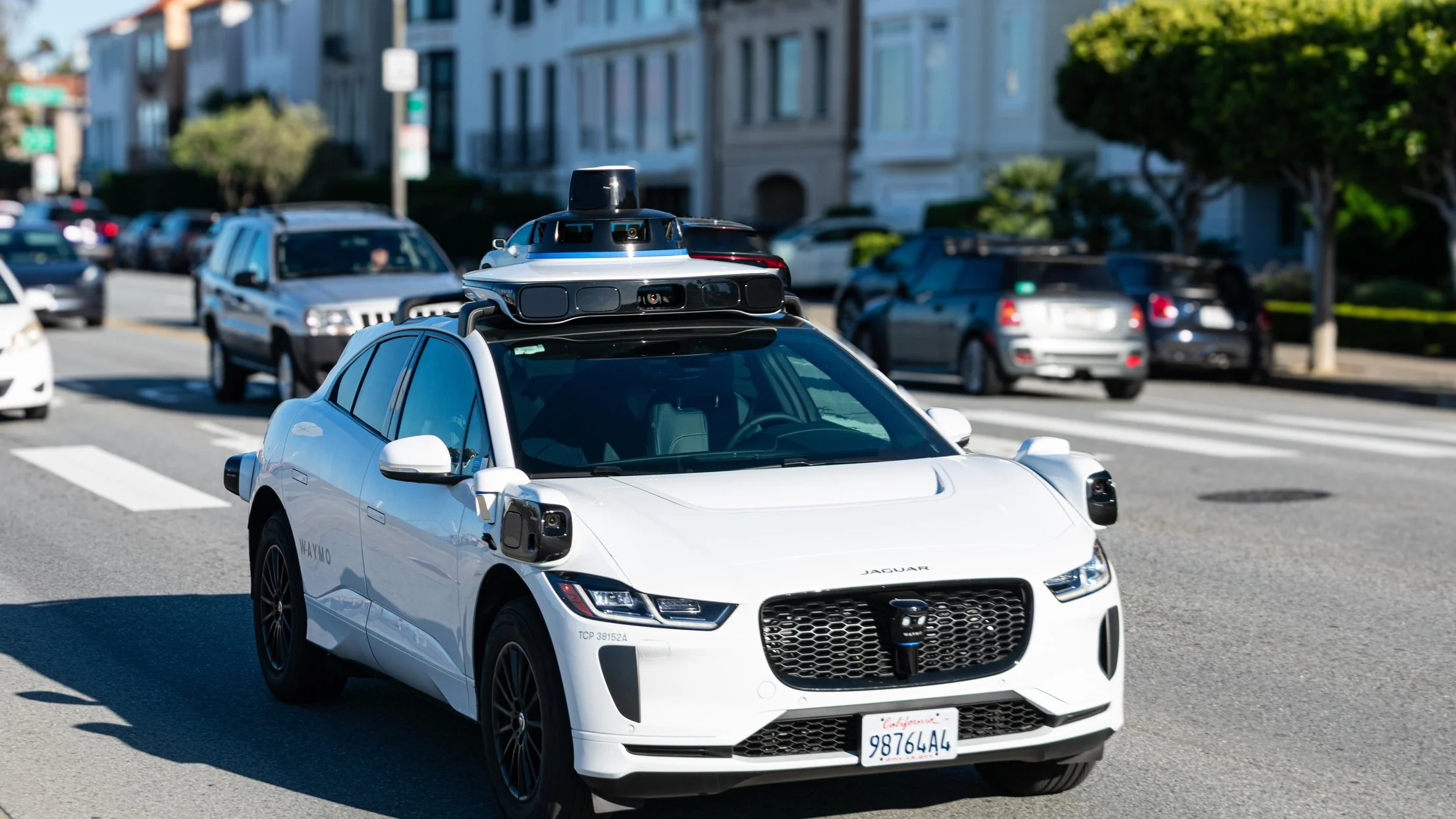
Fast-forward 15 years, and robotaxis can be found all over city streets from China to Abu Dhabi. The ones developed by Alphabet subsidiary Waymo have taken to the highways in California and Arizona and may soon arrive in Europe through a planned launch in London. For his part, Elon Musk has claimed that Tesla’s robotaxis will be available in 25% to 50% of the US by the end of the year, subject to regulatory approval. Authorities in both the EU and Switzerland have approved “Level 3 autonomy,” which enables conditional hands-off driving. In short, autonomous vehicles have arrived – or are about to.
Yet that doesn’t mean they’ll become a feature of our daily lives anytime soon. “Before you can introduce a fleet of robotaxis in a new city, you need to collect a lot of data in order to train and test the system,” says Prof. Alexandre Alahi at EPFL’s Visual Intelligence for Transportation (VITA) laboratory. “That’s because each city has its own identity based on its appearance, streets, road markings, street signs, driving customs and how other road users such as pedestrians and the riders of two-wheeled vehicles behave, in both static and dynamic conditions.” Engineers are therefore working to develop models that can function in any city and in complex environments, while being able to handle unexpected and critical situations.
Using AI to enhance prediction
“We’re developing what are known as ‘world models,’ which can produce video images of what’s likely to happen next in a given real-world situation,” says Alahi. “These models use generative AI to simulate critical situations that are unprecedented or unpredictable – and for which little or no real-world data are available – and create extremely realistic scenarios. Then we can test algorithms on these scenarios and train them in the virtual environments, thus improving the autonomous driving system.”
Unlike large language models, which don’t have prediction or direct simulation capabilities for physical environments, world models learn from representations derived from sensory data and can predict dynamics including movement, force and spatial relationships. For instance, if a vehicle comes across a potential anomaly, the world model will continually generate several options for what should be done next: brake, change lanes or take another preventive measure.
Alahi’s research group is also exploring how to equip machines with social intelligence. “An 18-year-old can learn how to drive in around 20 hours because they already have an understanding of the physical world around them,” says Alahi. “All they need to do is ‘update’ that understanding in order to drive. But no AI model today could learn to drive in all cities in just 20 hours. However, the AI model would be better at driving than a human because it would have 360° vision and faster reflexes and would never be distracted by a smartphone. So our goal is to program this kind of social intelligence into a machine so that it can simulate human behavior. Here, the challenge is to make the model reliable in any situation, including highly improbable ones.”
Paving the way for autonomous systems
For now, self-driving cars still make mistakes – often to the delight of both the media and the makers of competing technology. But Alahi is convinced that this technology will be pivotal going forward. “Autonomous vehicles can create a world with almost no car accidents. And I don’t mean only the serious ones, but also the minor collisions that block traffic for hours. They have a huge social and environmental impact owing to the lost time and delays that trigger a whole chain of events. What’s more, machines store a wealth of information that we don’t have and wouldn’t be able to process anyway, enabling them to make optimized decisions, such as for saving energy.”
At EPFL’s Lab for Human-Oriented Mobility Eco-System (HOMES), Prof. Kenan Zhang is taking a macro view of the prospect of adding autonomous vehicles to our transport systems: “Using autonomous vehicles as taxis will help reduce private driving and could cut back on urban traffic. But we need a highly efficient system to ensure that robotaxis are just as flexible as personal cars – otherwise, people won’t be willing to adopt them.” She also believes that autonomous vehicles can create a new form of car-sharing. “Instead of owning a car and just keeping it parked most of the time, you could rent it out to other people when you don’t need it.” The question is, how many more years will it take before we get there?
References
This article was published in the March 2026 issue of Dimensions, an EPFL magazine that showcases cutting-edge research through a series of in-depth articles, interviews, portraits and news highlights. It is distributed free of charge on EPFL’s campuses.
Author: Anne-Muriel Brouet
Source: EPFL news