
The European Research Council (ERC) awarded nine “ERC Advanced Grants” to EPFL researchers. This prestigious funding scheme gives senior researchers the opportunity to pursue ambitious, curiosity-driven projects that could lead to major scientific breakthroughs.
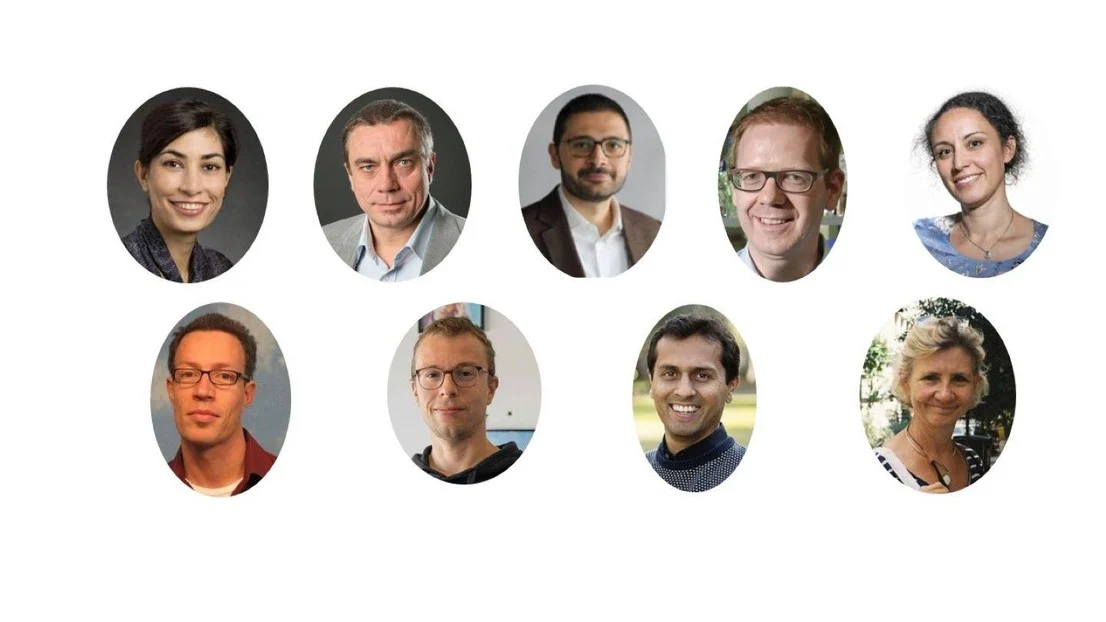
Congratulations to Negar Kiyavash (CDM), Michel Bierlaire (ENAC),Dimitrios Lignos (ENAC), Christian Heinis (SB), Aleksandra Radenovic (STI), Felix Naef (SV), Alexandre Persat (SV), Pavan P Ramdya (SV) and Gisou van der Goot (SV)!
The granted projects to EPFL researchers span a broad range of research fields, including life and biomedical sciences, neuroscience, chemistry and drug discovery, engineering and nanotechnology, artificial intelligence and data science, as well as architecture and urban resilience.
The ERC received a record of 3,329 proposals, up 31% from last year. 9.6% proposals were selected for funding. At EPFL, 30% of the submitted proposals have been selected for funding. Quoting the Swiss State Secretariat for Education, Research and Innovation, this outstanding result contributes to highlight both the excellence of Switzerland’s research landscape and the importance of Switzerland’s association to Horizon Europe.
- Negar Kiyavash, Full Professor: CIEL – Causal Inference for Exploration and Learning
- Alexandre Persat, Associate Professor: MUCOID – The Mechanobiology of Klebsiella pneumoniae infections
- Felix Naef, Full Professor: CircaSync – Context-dependent Circadian Clock Synchrony across Cells and Tissues
- Aleksandra Radenovic, Full Professor: NEON – Building Scalable and Sustainable Neuromorphic Architectures with Bio-Solid-State Nanopores
- Dimitrios Lignos, Full Professor: DARE – Unibody Buildings for Urban Resilience
- Michel Bierlaire, Full Professor: COBRA – Optimization for Behavioral Response Analysis
- Christian Heinis, Associate Professor: DRUGGABLE – Drugging the “undruggable” by sampling a vast chemical space of membrane-permeable cyclic peptides
- Gisou van der Goot, Full Professor: ExpLORD – Deciphering the Lipid Oxygen Radical Defense (LORD) Pathway in Oxidative Stress, Physiology, and Disease
- Pavan Ramdya, Associate Professor: NeuroPRIME – Neuromuscular Building Blocks for Limb Control and Motor Learning
Full results of this call are available here.
Author: Ainhoa Echeverria