
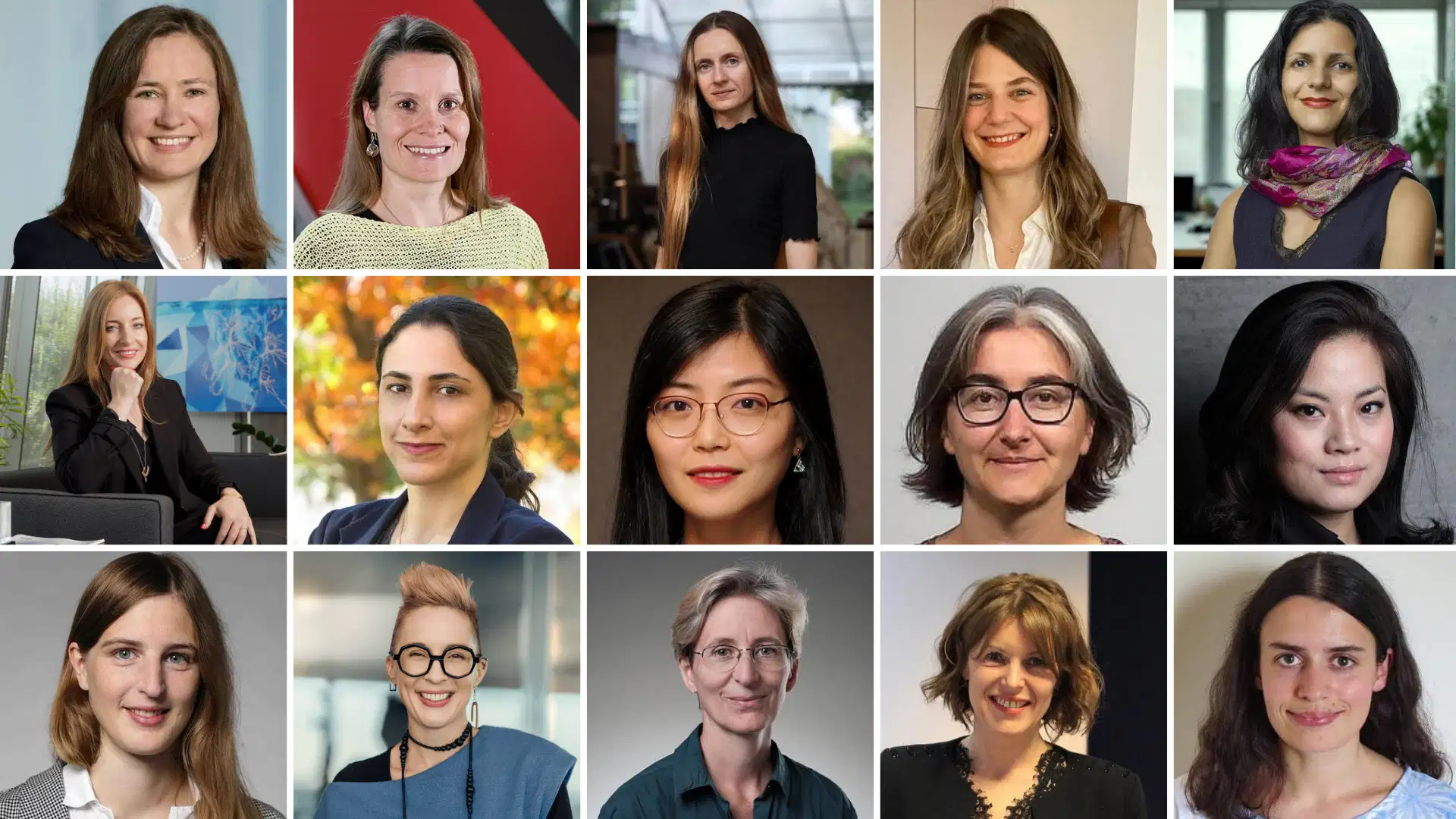
Fifteen women from across EPFL are being featured in the 2026 Top 100+ Women in AI, Data & Robotics report, celebrating their engagement and contribution to Switzerland’s rapidly evolving AI ecosystem.
Initiated by the ETH AI Center and Greater Zurich Area, the report is now in its second edition. Beyond spotlighting women’s contribution to AI, data and robotics, it also serves as a testimony of Switzerland’s strong position as an international hub for talent and innovation.
Rather than a ranking, the report describes itself as a snapshot of the people advancing research, building technologies and companies, and contributing to the wider societal conversation around AI.
The EPFL cohort reflects the remarkable breadth of this work. From machine learning, robotics and control to health, education, scientific discovery and the built environment, their research illustrates how artificial intelligence increasingly cuts across disciplines.
Among those recognized are Anne-Florence Bitbol, Anne-Marie Kermarrec, Aude Billard, Charlotte Bunne, Jamie Paik, Lenka Zdeborová, Mahsa Shoaran, Mary-Anne Hartley, Maryam Kamgarpour, Tanja Käser, Kenan Zhang, Mackenzie Mathis, Maria Brbić, Olga Fink and Stefana Parascho.
Their inclusion highlights women’s growing contribution of women to AI in Switzerland, as well as the diversity of perspectives and disciplines shaping what AI becomes next.
Discover the 2026 report and the women featured in this year’s edition: HERE
Author: Mélissa Anchisi